

Non-destructive testing (NDT) and non-destructive examination (NDE) are terms often used interchangeably in industries such as construction, manufacturing, and aerospace. While they share many similarities, they have distinct differences that are important to understand for those working in these fields. This comprehensive guide will explore the nuances between NDT and NDE, their applications, techniques, and significance in ensuring the safety and integrity of materials and structures.
Understanding Non-Destructive Testing (NDT)
Non-destructive testing (NDT) is a broad category of inspection methods used to evaluate the properties of a material, component, or system without causing damage. The primary goal of NDT is to detect defects and discontinuities that could compromise the integrity and performance of the item being inspected. This type of testing is essential in industries where safety and reliability are paramount, as it allows for the detection of potential issues before they lead to failures. NDT encompasses a variety of techniques, each suited to different materials and types of defects. Some common NDT methods include ultrasonic testing, radiographic inspection, magnetic particle testing, and liquid penetrant testing. These methods are used to inspect everything from welds and pipelines to aircraft components and structural steel.

Techniques of Non-Destructive Testing
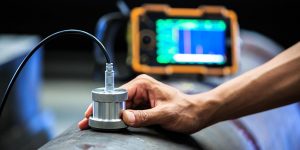
Ultrasonic testing involves sending high-frequency sound waves into a material and measuring the reflected waves to detect internal flaws. This method is highly effective for detecting cracks, voids, and other internal defects in metals, composites, and plastics. It is widely used in industries such as aerospace, automotive, and manufacturing due to its precision and ability to inspect complex shapes.
Radiographic inspection uses X-rays or gamma rays to produce images of the internal structure of a material. This method is particularly useful for detecting internal voids, cracks, and inclusions in welds and castings. It provides a permanent record of the inspection and is commonly used in the petrochemical, construction, and power generation industries.
Magnetic particle testing is used to detect surface and near-surface discontinuities in ferromagnetic materials. The method involves applying a magnetic field to the material and then sprinkling iron particles on the surface. The particles accumulate at areas of magnetic flux leakage, indicating the presence of defects such as cracks or voids. This technique is widely used in the inspection of automotive components, pipelines, and structural steel.
Liquid penetrant testing is a method used to detect surface-breaking defects in non-porous materials. The process involves applying a liquid dye to the surface of the material, allowing it to penetrate any defects, and then removing the excess dye. A developer is then applied to draw out the dye from the defects, making them visible under ultraviolet or visible light. This technique is commonly used in the aerospace, automotive, and manufacturing industries for inspecting welds, castings, and forgings.
Applications of Non-Destructive Testing
Non-destructive testing is critical in various industries to ensure the safety, reliability, and quality of products and structures. In the aerospace industry, NDT is used to inspect aircraft components such as wings, fuselage, and engines to detect defects that could lead to catastrophic failures. Similarly, in the automotive industry, NDT is used to inspect critical components such as axles, wheels, and suspension systems to ensure they meet stringent safety standards. In the construction industry, NDT is used to inspect welds, structural steel, and concrete to detect defects that could compromise the integrity of buildings and infrastructure. In the oil and gas industry, NDT is used to inspect pipelines, storage tanks, and pressure vessels to detect corrosion, cracks, and other defects that could lead to leaks and failures. In the power generation industry, NDT is used to inspect turbines, boilers, and reactors to ensure they operate safely and efficiently.
Understanding Non-Destructive Examination (NDE)
Non-destructive examination (NDE) is a subset of NDT that focuses on the interpretation and evaluation of test results to make decisions about the integrity and safety of materials and structures. While NDT refers to the testing process itself, NDE encompasses the entire evaluation process, including the selection of appropriate testing methods, the execution of tests, and the analysis and interpretation of results. NDE is a critical component of quality assurance and safety programs in industries where the failure of materials or structures could have serious consequences. The goal of NDE is to provide a comprehensive assessment of the condition of materials and structures, identify potential defects, and determine their significance in relation to the overall integrity and performance of the item being inspected.
Techniques of Non-Destructive Examination
NDE techniques are similar to those used in NDT, but they place a greater emphasis on the analysis and interpretation of test results. For example, in ultrasonic testing, NDE involves not only detecting internal flaws but also evaluating their size, location, and orientation to determine their impact on the material’s integrity. Similarly, in radiographic inspection, NDE involves interpreting the radiographs to identify defects and assess their significance. NDE also involves the use of advanced techniques such as phased array ultrasonic testing, which uses multiple ultrasonic elements to create detailed images of the internal structure of a material. This technique allows for more accurate detection and evaluation of defects, making it particularly useful in the inspection of complex components such as turbine blades and aircraft engines. Another advanced NDE technique is computed tomography (CT) scanning, which uses X-rays to create detailed 3D images of the internal structure of a material. This technique is highly effective for detecting and evaluating defects in complex geometries and is commonly used in the aerospace and automotive industries.
Applications of Non-Destructive Examination
Non-destructive examination is essential in industries where the failure of materials or structures could have serious consequences. In the aerospace industry, NDE is used to assess the integrity of aircraft components and ensure they meet stringent safety standards. This involves not only detecting defects but also evaluating their significance and determining whether repairs or replacements are necessary.
In the automotive industry, NDE is used to evaluate the condition of critical components such as axles, wheels, and suspension systems. This involves interpreting test results to identify defects and assess their impact on the safety and performance of the vehicle. NDE also plays a critical role in the development of new materials and components, helping to ensure they meet design specifications and performance requirements.
In the construction industry, NDE is used to evaluate the condition of welds, structural steel, and concrete. This involves interpreting test results to identify defects and assess their significance in relation to the overall integrity of the structure. NDE is also used to monitor the condition of buildings and infrastructure over time, helping to detect and address potential issues before they lead to failures.
In the oil and gas industry, NDE is used to assess the condition of pipelines, storage tanks, and pressure vessels. This involves interpreting test results to identify defects and assess their impact on the safety and reliability of the infrastructure. NDE also plays a critical role in the maintenance and repair of oil and gas facilities, helping to ensure they operate safely and efficiently.
Key Differences Between NDT and NDE
While NDT and NDE are closely related, there are some key differences between the two. NDT refers to the testing process itself, including the selection of appropriate testing methods, the execution of tests, and the detection of defects. NDE, on the other hand, encompasses the entire evaluation process, including the analysis and interpretation of test results to make decisions about the integrity and safety of materials and structures. NDT is primarily concerned with detecting defects and discontinuities, while NDE focuses on evaluating the significance of those defects in relation to the overall integrity and performance of the item being inspected. NDT provides the data needed to identify defects, while NDE provides the analysis needed to determine their impact and make decisions about repairs or replacements. Another key difference is the level of expertise required. NDT technicians are trained to perform tests and detect defects, while NDE technicians require additional training in the interpretation and evaluation of test results. This additional training allows NDE technicians to provide a more comprehensive assessment of the condition of materials and structures and make informed decisions about their safety and reliability.
Importance of NDT and NDE in Industry
Both NDT and NDE are critical components of quality assurance and safety programs in various industries. They help ensure the safety, reliability, and quality of products and structures by detecting defects and discontinuities before they lead to failures. By providing a comprehensive assessment of the condition of materials and structures, NDT and NDE help prevent accidents, reduce downtime, and extend the lifespan of equipment and infrastructure. In the aerospace industry, NDT and NDE are essential for ensuring the safety and reliability of aircraft components. They help detect defects that could lead to catastrophic failures, ensuring that aircraft operate safely and efficiently. In the automotive industry, NDT and NDE help ensure the safety and performance of critical components, reducing the risk of accidents and improving the reliability of vehicles. In the construction industry, NDT and NDE help ensure the integrity of buildings and infrastructure by detecting defects that could compromise their safety and stability. In the oil and gas industry, NDT and NDE help ensure the safety and reliability of pipelines, storage tanks, and pressure vessels, reducing the risk of leaks and failures. In the power generation industry, NDT and NDE help ensure the safety and efficiency of turbines, boilers, and reactors, reducing the risk of accidents and improving the reliability of energy production.
Contact Us To Find Out More
Non-destructive testing (NDT) and non-destructive examination (NDE) are essential tools for ensuring the safety, reliability, and quality of materials and structures in various industries. While they share many similarities, they have distinct differences that are important to understand. NDT refers to the testing process itself, while NDE encompasses the entire evaluation process, including the analysis and interpretation of test results. Both NDT and NDE play critical roles in quality assurance and safety programs, helping to detect defects and discontinuities before they lead to failures. Get in touch with the team at Format NDT to find out more