
Corrosion is one of the most common and costly challenges facing industrial infrastructure. Over time, metal components exposed to environmental conditions can gradually deteriorate, weakening structures and equipment that are essential to safe operations. Whether in pipelines, storage tanks, structural steelwork or pressure vessels, corrosion has the potential to cause serious damage if it is not identified and addressed early.
Detecting corrosion before it becomes a critical problem is essential for maintaining safety and reliability in industrial environments. This is where non-destructive testing plays a vital role. Non-destructive testing, commonly known as NDT, allows engineers and inspectors to evaluate materials and structures without damaging them. Through specialised inspection techniques, corrosion can be detected, monitored and assessed long before it leads to structural failure.
At Format NDT, we work with companies across the UK to help identify corrosion and other material defects using proven non-destructive testing methods. From our base in St Helens near Liverpool, we provide inspection services designed to support industries that rely on the long-term integrity of their equipment and infrastructure.
Why Corrosion Is a Major Concern in Industry
Corrosion occurs when metals react with their environment, gradually breaking down over time. This process can be accelerated by exposure to moisture, chemicals, salt, high temperatures or fluctuating environmental conditions.
Industrial facilities often contain large numbers of metal components that are exposed to these conditions. Pipelines carrying liquids or gases, storage tanks holding chemicals and structural frameworks supporting heavy machinery can all be vulnerable to corrosion.
The challenge with corrosion is that it often develops gradually and may not be visible on the surface during the early stages. Internal corrosion within pipes or hidden corrosion beneath coatings can remain undetected for long periods.
If corrosion progresses without inspection, it can weaken metal components to the point where cracks, leaks or structural failures occur. In industries such as energy, manufacturing and civil engineering, these failures can lead to significant safety risks and costly disruptions.
The Importance of Early Detection
Detecting corrosion early allows engineers to take preventative action before serious damage occurs. Repairs, protective treatments or component replacements can be carried out while the structure is still safe and operational.
Non-destructive testing provides a practical way to monitor corrosion without dismantling equipment or interrupting operations unnecessarily. Because the inspection methods do not damage the component being tested, structures can continue to be used after the inspection has been completed.
This ability to inspect components while they remain in service is one of the key advantages of non-destructive testing in industrial environments.
At Format NDT, we regularly support maintenance teams and engineering departments by providing detailed inspection services that help identify corrosion at an early stage.
How Non-Destructive Testing Detects Corrosion
Several non-destructive testing techniques are used to detect corrosion in industrial structures. Each method is suited to different materials, environments and types of corrosion damage.
Some techniques focus on identifying surface corrosion that can be seen on exposed metal, while others are capable of detecting internal corrosion hidden within pipes, tanks or structural components.
By selecting the appropriate inspection method, engineers can gain a clear understanding of the condition of the material and determine whether corrosion has begun to compromise its strength.
Ultrasonic Testing for Corrosion Detection
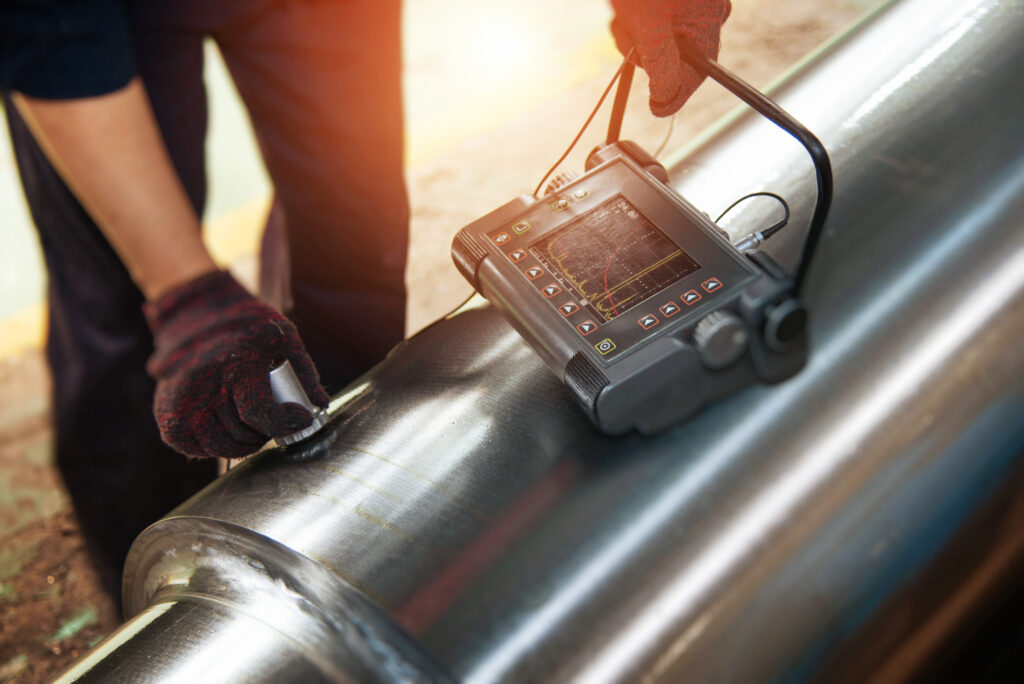
Ultrasonic testing is one of the most widely used techniques for detecting corrosion in industrial equipment. This method uses high-frequency sound waves to measure the thickness of metal components and identify areas where material has been lost due to corrosion.
During ultrasonic inspection, a probe sends sound waves into the metal surface. These waves travel through the material and reflect back when they reach the opposite side of the component.
By measuring the time it takes for the sound waves to return, inspectors can calculate the thickness of the material. If corrosion has caused thinning of the metal, this change in thickness can be detected accurately.
Ultrasonic testing is particularly useful for inspecting pipelines, pressure vessels and storage tanks where internal corrosion may occur but cannot be seen from the outside.
Radiographic Inspection for Internal Damage
Radiographic testing is another powerful method used to detect corrosion within industrial components. This technique uses X-rays or gamma rays to produce an image of the internal structure of the material.
When radiation passes through the component, differences in material density appear on the resulting image. Areas affected by corrosion may appear as thinner sections or irregular patterns within the structure.
Radiographic inspection allows inspectors to examine the inside of pipes, welded joints and structural components without dismantling them. This makes it a valuable tool for identifying corrosion that would otherwise remain hidden.
At Format NDT, radiographic testing is often used alongside other inspection methods to provide a comprehensive assessment of the condition of critical components.
Visual Inspection and Surface Corrosion
Although advanced testing technologies play a key role in corrosion detection, visual inspection remains an important part of the process. Trained inspectors examine surfaces carefully to identify visible signs of corrosion such as rust, pitting or surface deterioration.
Surface corrosion may appear as discolouration, flaking metal or rough patches on the surface of the material. In some cases, protective coatings may show signs of damage that indicate corrosion could be developing beneath them.
Visual inspection often provides the first indication that corrosion may be present. Once surface damage has been identified, additional non-destructive testing methods can be used to assess the extent of the problem.
Dye Penetrant Testing for Surface Cracks
Corrosion can sometimes lead to small cracks forming on the surface of metal components. Dye penetrant testing is a useful technique for detecting these cracks and other surface-breaking defects.
In this method, a liquid penetrant is applied to the surface of the metal. The liquid seeps into any small cracks or openings in the material. After the excess penetrant is removed, a developer is applied which draws the liquid back out of the defect, making it visible to the inspector.
This process allows very fine cracks caused by corrosion to be detected quickly and accurately.
Monitoring Corrosion Over Time
In many industrial environments, corrosion monitoring is an ongoing process rather than a one-time inspection. Components that are exposed to harsh conditions may require regular inspections to ensure that corrosion is not progressing beyond acceptable limits.
By comparing inspection results over time, engineers can identify trends in corrosion development. This information helps maintenance teams plan repairs or replacements before the material reaches a critical condition.
Non-destructive testing is particularly valuable for this type of monitoring because it allows repeated inspections to be carried out without affecting the structure.
At Format NDT, we often support clients with scheduled inspection programmes designed to track the condition of their equipment and infrastructure over time.
Industries That Rely on Corrosion Detection
Many industries depend heavily on effective corrosion detection to maintain safe and reliable operations. Oil and gas facilities rely on regular inspections to monitor pipelines and storage systems that transport and store corrosive substances.
Power generation plants must inspect high-temperature components that are exposed to demanding operating conditions. Manufacturing facilities depend on corrosion monitoring to ensure the reliability of machinery and production equipment.
Infrastructure projects such as bridges, rail networks and civil engineering structures also require ongoing inspections to identify corrosion that may affect structural stability.
Across all of these sectors, non-destructive testing provides the ability to assess the condition of metal components without interrupting operations unnecessarily.
Supporting Industrial Reliability with Inspection
Preventing corrosion-related failures is essential for maintaining the safety and efficiency of industrial operations. By identifying corrosion early, businesses can avoid costly repairs, unexpected downtime and potential safety hazards.
Non-destructive testing allows corrosion to be detected accurately while keeping components intact and operational. Through techniques such as ultrasonic testing, radiographic inspection and visual examination, engineers can gain a clear understanding of the condition of their equipment.
At Format NDT, our inspection services help organisations across the UK maintain the integrity of their structures and equipment. From pipelines and pressure vessels to structural frameworks and welded components, our testing methods are designed to identify corrosion and support effective maintenance strategies.
Understanding how corrosion detection works highlights the importance of regular inspection and professional expertise in protecting industrial assets.
By combining advanced testing technology with experienced inspection teams, non-destructive testing continues to play a vital role in ensuring that industrial structures remain safe, reliable and fit for purpose throughout their operational life.